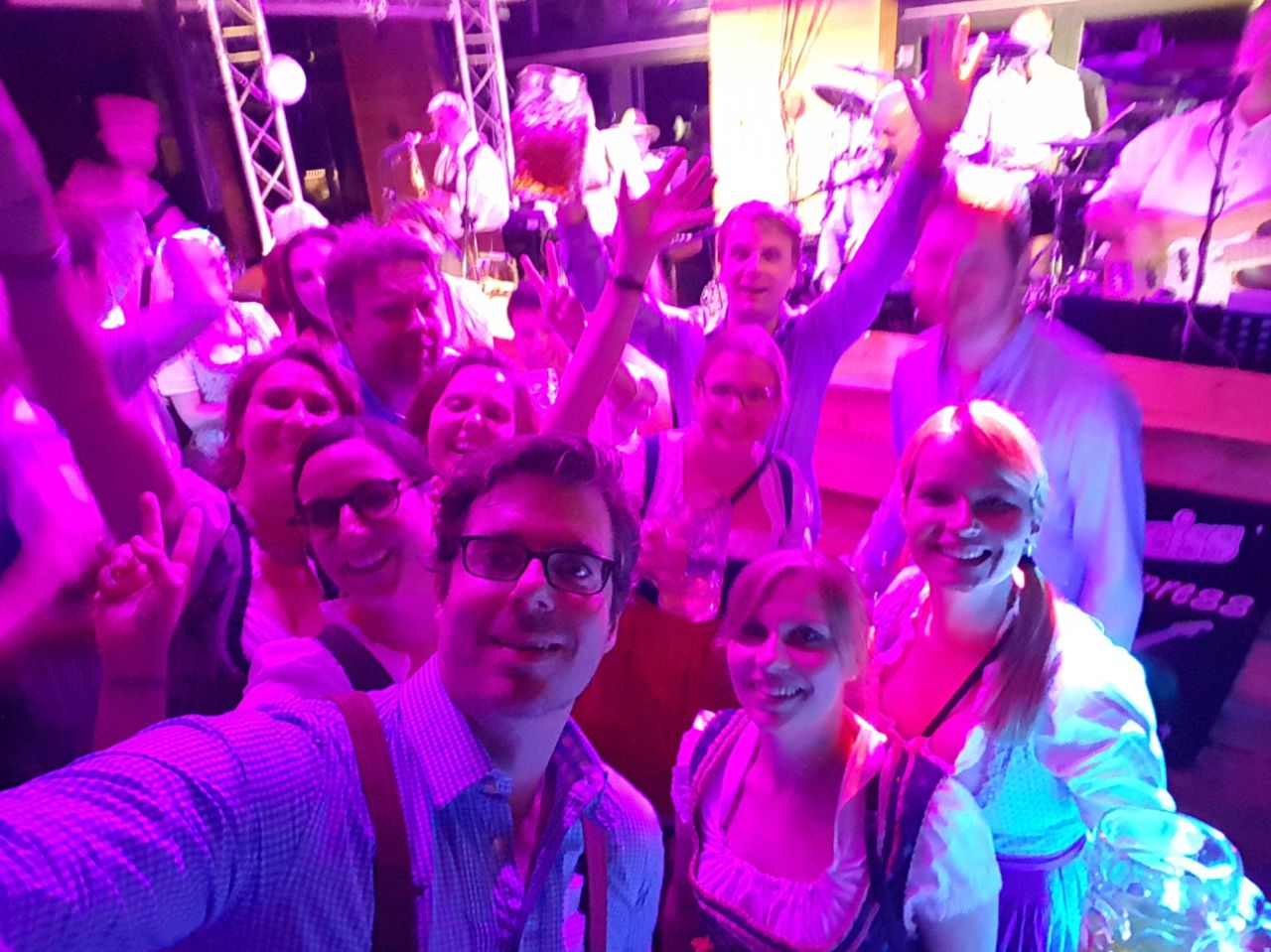
In Germany Oktoberfest is actually at the end of September but everywhere is seems to take the name literally and has it in October. Of course I had to compare the two countries I was living in! Obviously the German one was better 😉 Berlin, Germany (and a bunch of crazy Germans)
The Viking tour also brought me to two other towns in Sweden, Sigtuna and Uppsala. Founded in 980, Sigtuna is the oldest town in Sweden though there are many legends that mention Sigtuna. At one point it was the most important city in the country. The medieval centre is the main attraction there.
Steps away from the old town you will find St. Olaf's Church, well what remains of it. The church was originally built around the year 1100 though no one is quite sure by whom. It is dedicated to the Norwegian viking Olaf Tryggvasson, king between 995-1000.
Across the street there is a traditional old school house which is now a municipal office.
While it is not a very big place, it is definitely worth the visit! And then the last stop on the tour, Uppsala which is best known for its university.
The city has shifted from its original location - now called Gamla Uppsala. I didn't spend much time here, it was mainly to visit the Uppsala Cathedral. The cathedral dates to the late 13th century and is French Gothic style though a Lutheran church.
Of course it wouldn't be Sweden without another rune stone!
As you know I have already seen Viking ships but not more historical aspects of the Viking culture so I took a tour. The first stops along the way were to see runestones and a council meeting space. Vikings were actually a pretty developed society that engaged in commerce all over the world. They spoke several languages and would travel to Constantinople to trade with all over the world. While some of their acts were savage, they were more advanced than most shows and movies make them out to be. Runestones are basically stories about men who were Viking warriors and/or died while travelling. They can be found all over Scandinavia but Sweden as by far the most - somewhere between 1,700 and 2,500. There was one in even in the city centre but for this tour, they were all in the outskirts and countryside.
These ones were all around the suburb of Stockholm known as Täby which is also where we saw a traditional looking farm.
As mentioned, we also saw a Viking council area - based on the layout of the rocks in the area, they believe it was where decisions were taken by those that governed at that time. You can see them in behind the runestone. The site was beside a lake which in Sweden, are all public. People have the right to camp on other's property because certain distances from the water belong to everyone.
Then it was off to the countryside around Hökeriet to see another old Viking establishment with a giant runestone!
Some of the runestones are found now where churches stand, in some cases they are even embedded in the structure. Unfortunately I cannot remember the name of the church or where it was (again, a failing of not keeping this up to date!)
The last part of the tour was fittingly Viking burial grounds which are huge hills. Vikings were often buried with their possessions which sometimes included their ships which is why some of the mounds are so large. This site was also beside a church which had - yes - a runestone but also this super cool trunk that had a bunch of locks so that treasure was harder to steal. Those Vikings knew what they were doing!
I didn't mention it in the previous post but Drottningholm and its gardens are a UNESCO site. Ok, now on to the gardens. The palace gardens are immense - they include a Chinese pavilion, English and Baroque gardens.You can get sense of the size of the gardens from this picture. . .
While October is not the best time of year to visit gardens, they were still impressive to see!
On they way to the Chinese pavilion there is a tent for the royal guards.
The first pavilion was finished in time for Queen Lovisa Ulrika's birthday on 24 July 1753. The pavilion was a surprise gift to the Queen from King Adolf Frederick.
Actually, the pictures you are seeing are not the original building. It was built so quickly it ended up falling apart in the Swedish climate and the second building was completed in 1769 and has stood the test of time.
I continued to wander through the rest of the gardens until I made it back to the beginning!